

Saving the Orange-Fronted Parakeet | Kākāriki karaka

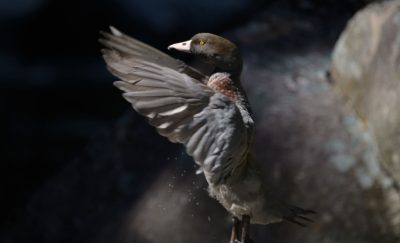
preview Orange Fronted Kakariki credit National Geographic Craig McKenzie x
Kākāriki karaka. Craig McKenzie, National Geographic

The two parent Kākāriki karaka doing the heavy lifting to help save their own species

Nacho and Trixie have been paired since 2023 at The Isaac Conservation and Wildlife Trust in Christchurch. In two breeding seasons they have produced 55 chicks, including 33 this season alone, contributing more than ten percent of the entire surviving population of kākāriki karaka. The species has been declared extinct twice, rediscovered twice, and now sits at around 450 birds in the wild. Trixie and Nacho are the super parents of the bird world but it takes a massive team effort and that’s why your support is so vital.

ea c f ab dfcb

The species

Kākāriki karaka, the orange-fronted parakeet, is endemic to Aotearoa and classified Threatened–Nationally Critical, the highest threat ranking under the New Zealand Threat Classification System. The birds are small and bright green,, with a thin orange stripe above the beak and a red crown. They are highly social, inquisitive birds who mate for life.  They share parenting duties with the females laying eggs and then once they hatch the male’s job is to race around finding food. 

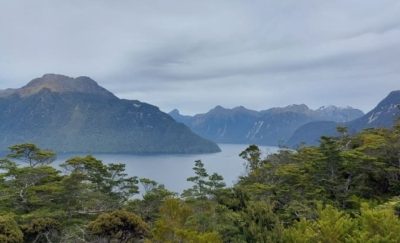
The population currently sits at 450 birds, with natural fluctuation driven by food availability and predator impacts. In years when the beech forest seeds heavily, the birds breed prolifically; in lean years they barely breed at all. Two wild populations remain, in North Canterbury, in the Hawdon Valley near Arthur’s Pass and in the Hurunui South Branch in Lake Sumner Forest Park. Each currently holds around 50 to 60 birds. These populations peaked at roughly 300 birds in each valley between the early 2000s and 2010 and then crashed under predator pressure.  Both populations have been reestablished through the release of juvenile birds raised through the captive breeding programme.

Beyond the wild valleys, populations of kākāriki karaka have been established at three predator free  sites: Ōruawairua/Blumine Island in the Marlborough Sounds, where they were translocated in 2011; the Brook Waimārama Sanctuary in Nelson, where they were released in 2021 and Pukenui/Anchor Island in Fiordland, where the most recent population was established in March 2025. 

Support the Orange-Fronted Parakeet | Kākāriki karaka

Help us save the Orange-fronted Parakeet | Kākāriki karaka

Donate to this project

Everything wants to eat them

Kākāriki karaka nest in tree cavities, often well above the forest floor, and this makes then vulnerable to rats, stoas, and possums, which will feed on adult birds, browse eggs and chicks.  Feral cats take adults feeding on the ground and fledglings, which are poor fliers when they first leave the nest cavity. A single rat plague in the Maruia Valley in 2001 wiped out 85 percent of that valley’s kakariki population in one season. Without aerial pest control to control rat numbers during heavy beech seeding years , the mainland populations would disappear.

The boom-and-bust biology compounds the risk. In a good seed year kākāriki karaka can produce multiple clutches; in a poor year they barely breed. That makes the wild population vulnerable to a single bad cycle, which is why the captive breeding population at The Isaac Wildlife and Conservation Trust and Orana Wildlife Park, and the predator-free sites at the Brook Waimārama Sanctuary, Ōruawairua, and Pukenui, matter so much. They are the backup.

Wayne Beggs, Manukura Kakariki Karaka at DOC, put the strategy in one line: “With this species, you literally cannot put all your eggs in one basket. We are absolutely not out of the woods, but with so many people doing the helping us we’re making real progress It takes a collective effort to save this very special species.   

cfa f d da acde cfa f d da acde
ad ea ca  ccb

The partnership

Kākāriki karaka recovery is led by the Department of Conservation (DOC) in partnership with Te Rūnanga o Ngāi Tahu, who have been working alongside DOC to protect this taonga manu for more than two decades. The Crown’s settlement with Ngāi Tahu in 1998 formally recognised kākāriki karaka as a taonga species, reflecting a relationship that goes back centuries, including the use of feathers for korowai and kākahu.

Captive breeding pioneer Anne Richardson (ONZM) developed the husbandry techniques at The Isaac Conservation and Wildlife Trust that have allowed hundreds of birds to be reared and released since 2003. That programme continues today at ICWT and Orana Wildlife Park, under the direction of the Kākāriki Karaka Recovery Group.

Yvette Couch-Lewis (ONZM), the Te Rūnanga o Ngāi Tahu Kākāriki Karaka Species Representative, has been representing iwi interests in the programme for more than 20 years, and was recognised in the 2021 Queen’s Birthday Honours with an Order of Merit for her services to conservation.

Rob Kinney, Chief Executive of The Isaac Conservation and Wildlife Trust, framed the wider point: “The recovery of kākāriki karaka is a great example of what can be achieved when organisations work together with a shared purpose. ICWT is proud to support the Brook Waimārama Sanctuary financially and to work alongside DOC as a national conservation partner.” 

Twice declared extinct, up against the odds with everything wanting to eat them. 450 left, on the planet.

Support the Orange-Fronted Parakeet | Kākāriki karaka

Help us save the Orange-fronted Parakeet | Kākāriki karaka

Donate to this project
Stay connected
Be the first to hear about project updates, opportunities, and stories from the wild.
Invest
Subscribe for updates

Subscribe for updates

Sign up to hear the latest news and updates from New Zealand Nature Fund.