

After the most successful season in the recovery programme’s history, there are now close to fifty in the wild.
This is what intensive, patient, partnership-led conservation looks like, and this is what your support keeps going.
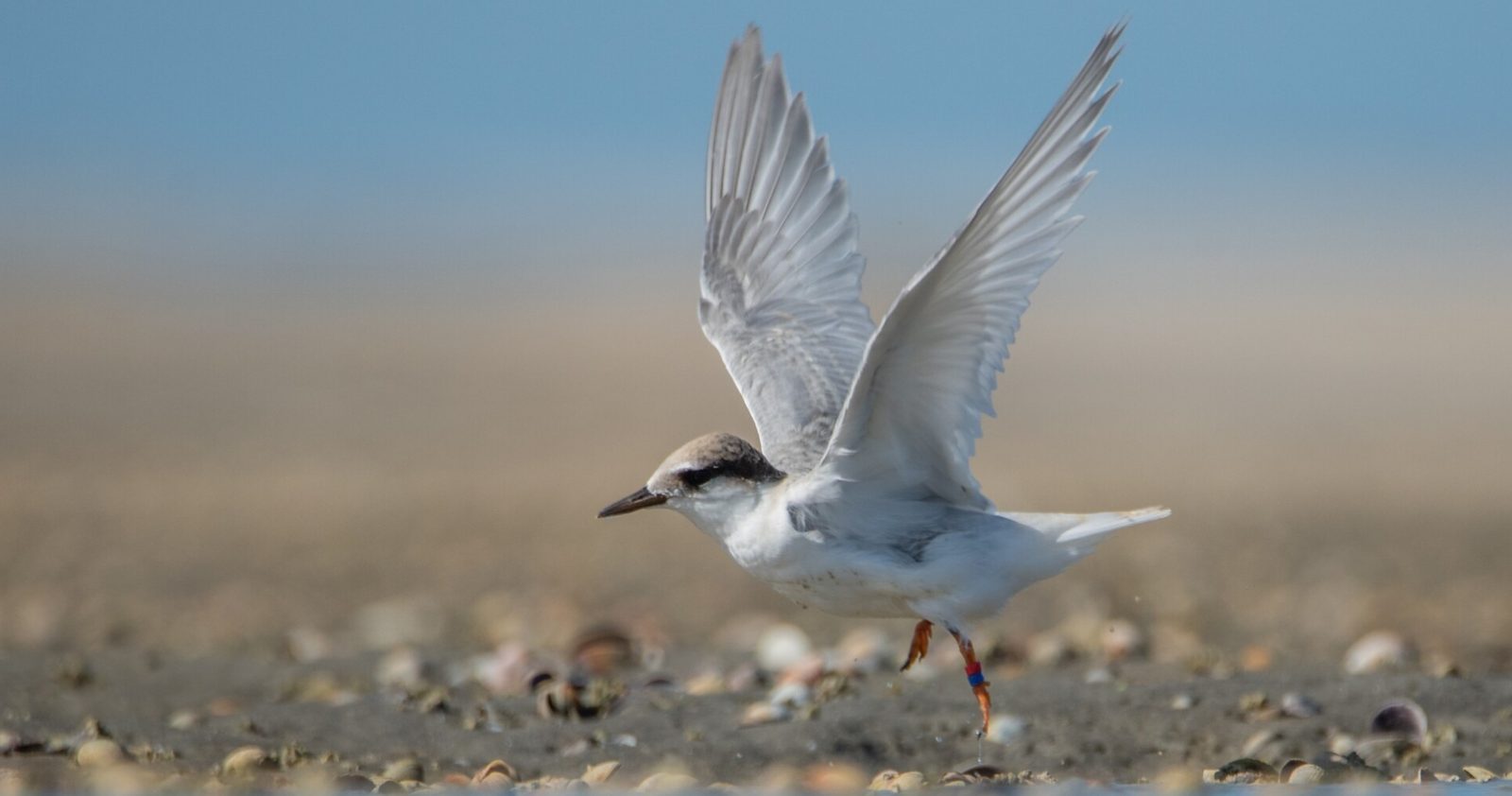
Tara iti is the smallest of New Zealand’s terns, weighing around 70 grams, roughly the size of your fist. Yellow bill, orange legs, and a unique colour-band combination on each bird’s leg. They nest on a handful of beaches and sandspits in Te Tai Tokerau and Tāmaki Makaurau, from Bream Bay south to Pākiri, along with several sites around the Kaipara Harbour. They are, in the truest sense of the word, endemic. They breed nowhere else on Earth.
The March 2026 census counted around 44 tara iti in the wild, up from roughly 36 at the start of the breeding season. Auckland Zoo then released ten captive-reared fledglings, bringing the total population to nearly fifty. Eleven breeding pairs across the recovery network produced that result, with the team now expecting up to fifteen pairs in the coming season.
For a species that was down to three or four breeding pairs in 1983, a 15 percent single-season increase is real recovery.