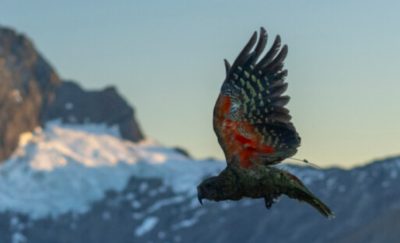


Kea are the birds people remember. Anyone who has walked back to a South Island car park to find one methodically working the rubber trim off a windscreen has met an animal that treats human property as a puzzle worth solving. That curiosity is part of why the country is so fond of them, and it is also what keeps getting them into trouble.
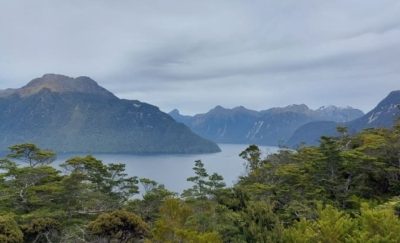
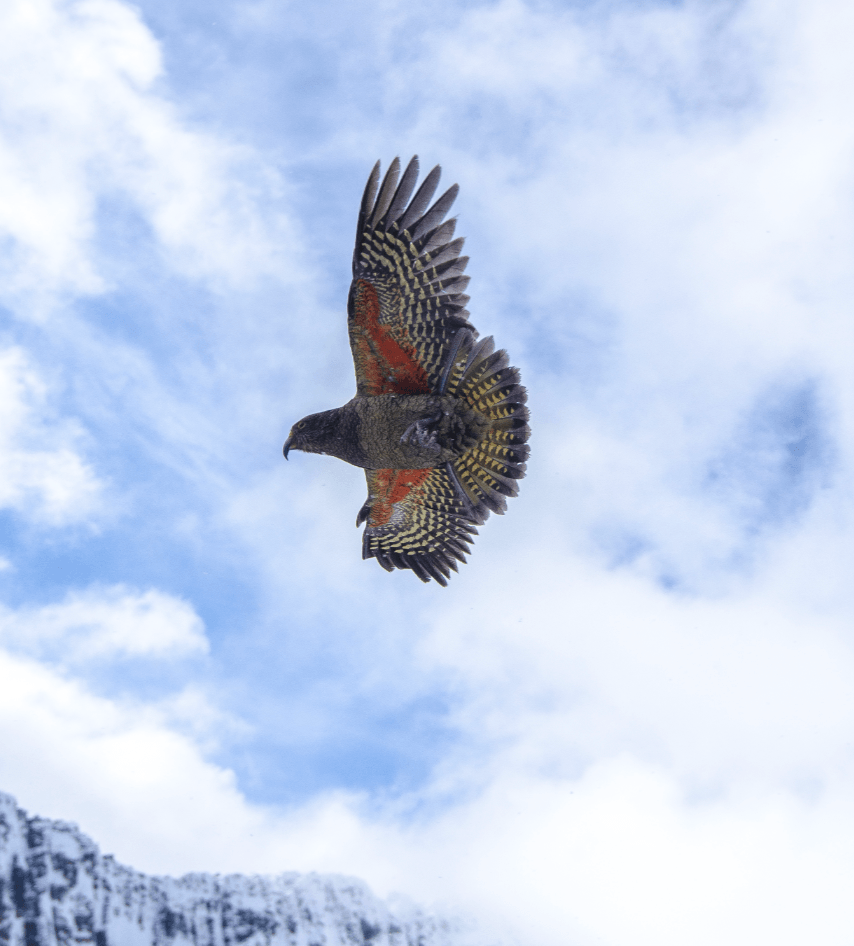
A taonga species for Ngāi Tahu and Ngā iwi o Te Tauihu, the kea (Nestor notabilis) ranges across Te Waipounamu from the snow line of the Southern Alps down into temperate coastal rainforest. The Kea Conservation Trust puts the wild population at fewer than 7,000, spread across roughly 3.5 million hectares, and kea are listed as Nationally Endangered in the most recent published threat assessment. Counting a bird that lives at altitude across that much country is genuinely hard, and published estimates range from around a thousand to several thousand. The threats are better understood than the numbers: predation, lead poisoning, and conflict with people, all of them worse east of the main divide where kea and human infrastructure overlap.
The Kea Conservation Trust has been working on those problems since 2006. NZ Nature Fund manages the Trust’s project fund, so donations made through our Protect the Kea page go directly into the Trust’s conservation work, with quarterly reporting and annual financial summaries on how it is spent. The Trust sent through an update this month, and there is a good deal in it.
Getting the lead out
Lead is one of the more insidious threats kea face, and one of the most fixable. Old backcountry buildings, huts and mines and roofs carrying lead flashings and lead-head nails, offer a curious bird something soft and shiny to chew, and any level of exposure is considered unsafe. Lead does not have to kill a bird outright to matter, because sub-clinical effects such as depressed immune function and impaired development compromise survival long before anything visible goes wrong.
After blood-testing more than 800 kea alongside the Department of Conservation and finding contamination across the range, the Trust secured $950,000 in Jobs for Nature funding and set about physically removing the source. It has since stripped approximately four tonnes of lead from over 500 buildings in kea habitat. That work continues across the South Island, backed by a further $150,000 from DOC and private donors, and a private funder has now confirmed another $100,000 for the year ahead.
It is slow, unglamorous work that depends on cooperation between contractors, DOC and private landowners, and it is one of the few kea threats where the fix is permanent. Once the lead is off a building, it stays off.
A decade of fieldwork in the Matukituki
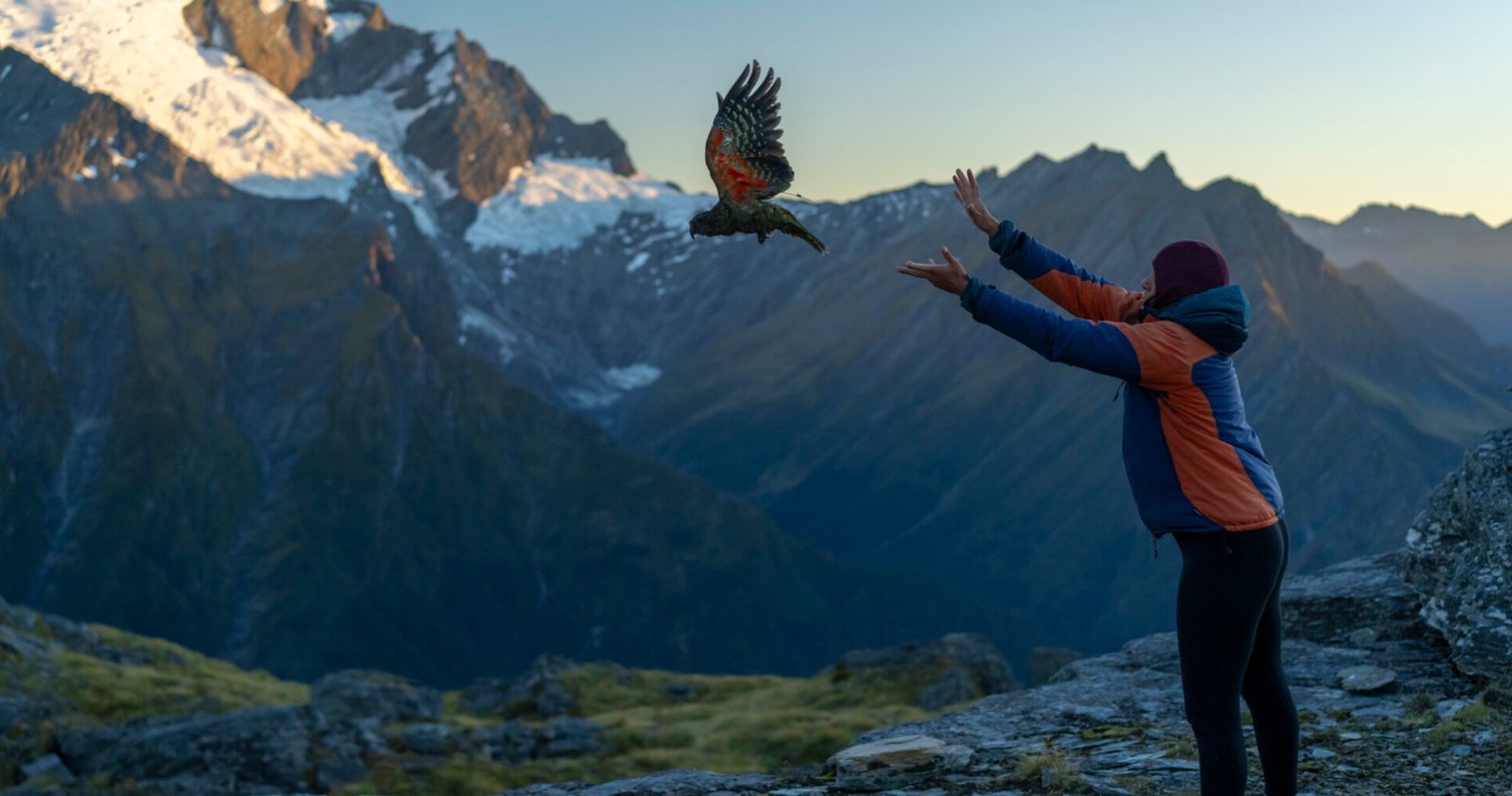
The Trust has been researching wild kea across the species range since 2009. One of its long-running sites is the Matukituki Valleys, in Mt Aspiring National Park, monitored alongside DOC and local partners since 2015. Over that decade the team has banded 259 birds and fitted 46 with transmitters, following them back to nest sites to build a picture of breeding success, predator pressure and survival.
Introduced predators are the reason that monitoring matters. Stoats can reduce kea nest survival to near zero in the plague years that follow a beech mast, and adult females sitting on nests are vulnerable in the same seasons. Knowing which valleys are producing chicks, and which are not, is what turns pest control from a general good intention into a targeted operation. The Matukituki data is now feeding into a new conservation plan for 2026 onwards.
One hundred people, two days
The Kea Summit brought together just under 100 people working on kea, with 27 presentations and four workshops across two days. Researchers, DOC staff, iwi representatives, zoo professionals and community volunteers spent the time working through the questions the recovery effort keeps running into, which is the value of getting everyone in one room rather than trading findings by email across a year.
Two funders came on board for the event and delegates got in behind a silent auction, which meant the Summit broke even for the first time. For a trust that runs on part-time positions, that matters as much as the programme did.
Keeping kea wild
The hardest kea problem is not technical. Kea seek people out, and every feed teaches a bird that humans are worth approaching, which draws them onto roads, into rubbish bins and car parks, and up onto the roofs where the lead is. Feeding a kea feels generous and works against everything else the recovery is trying to do.
The Kea Pledge is the Trust’s answer, developed with DOC, Ngāi Tahu, ZAA and Otago Polytechnic. It asks for two commitments: don’t feed kea, and keep food, rubbish and personal gear out of their reach. You can sign it at DOC visitor centres and on the Great Walks across the South Island, and download a free “Keep kea wild” poster from the Kea Toolkit.
The logo came out of a student design brief. Several Otago Polytechnic design students presented to a panel from the Kea Recovery Group, made up of Ngāi Tahu, DOC and the Trust, and Molly Smith’s design was the one chosen.
Alongside the Pledge, the Kea for Kids roadshow has reached more than 3,600 students across 59 schools since 2022, delivered free by a qualified educator against the curriculum. The Kea Survey App, launched in 2024, lets anyone with a phone log where kea are and, just as usefully, where they are not, which is how the Trust tracks distribution over time.
Bird flu, and what it means for kea
The H5N1 strain of highly pathogenic avian influenza reached New Zealand in July 2026, when it was detected in two wild birds, a brown skua at Petone and a kāhu in the Wairarapa. There have been no further detections since, and the virus is not established in wild bird populations here. What has changed is that the country now has to plan for the possibility rather than the prospect.
The Trust has published its assessment for kea, and it is measured. Kea do not nest in colonies, roost communally or mix with waterfowl, so their likelihood of infection is assessed as moderate rather than high, driven mainly by scavenging. The overall risk of kea extinction from HPAI is currently estimated to be low. The caution is that kea sit in small, declining sub-populations, so even a low mortality rate would slow the recovery and add to its cost.
If you see three or more sick or dead wild birds, fur seals or sea lions together, report it to Biosecurity New Zealand’s Exotic Pest and Disease Hotline on 0800 80 99 66, and do not touch them. The Trust’s full assessment is on the threats page of its website.
Where the funding goes next
Donations to the Kea Conservation Trust through NZ Nature Fund support the field monitoring and research in the Matukituki and other key sites, the lead removal and blood-lead surveillance, the four regional community engagement coordinators, the Kea for Kids programme, and the Summit.
The Trust operates on a lean annual budget with every position part-time, and that is the constraint its board named as a funding priority this year. A near-full-time field coordinator would hold the summer surveys, the monitoring, the banding and lead surveillance, the work with allied predator control partners and the data analysis together in one pair of hands, instead of spread thin across roles that keep turning over.
Kea are among the most recognisable birds in the country and among the most at risk. Your donation funds the fieldwork, the lead removal, the community programmes and the long-term monitoring that give the species its best chance.
To donate, head here.