

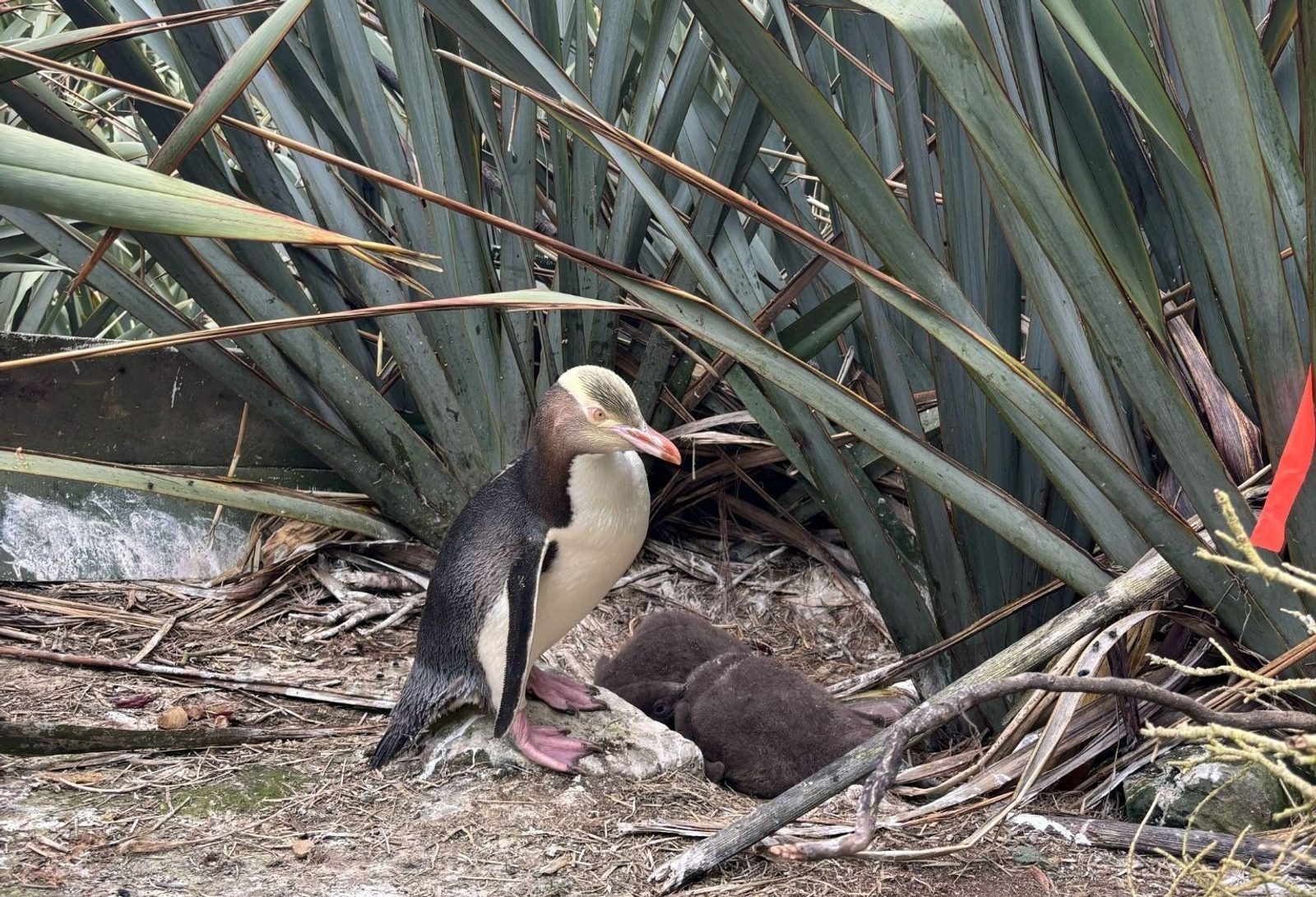
The hoiho, the yellow-eyed penguin, is one of the rarest penguins in the world. The Yellow-eyed Penguin Trust (YEPT) has just sent through its 2025/26 mainland season report, and we are passing the highlights on to you. The fieldwork, wildlife hospital care, planting, trapping and research that follow all run in part on donor support that comes through NZ Nature Fund.
The season in numbers
YEPT field rangers, working with the Department of Conservation (DOC), monitored 13 hoiho nests this season from Tavora in North Otago through to Long Point in the Catlins. Seventeen chicks fledged. Nest numbers were down 31.5 percent on the previous season, and that is the hard line at the front of the report.
The encouraging line is the resightings. Fifteen juveniles from earlier seasons were seen on the coast this year, up from three the year prior. After several years where resighting numbers stayed low, birds that fledged in previous seasons are showing up again, alive and old enough to be counted. That shift matters.

What kept the chicks alive
One YEPT ranger was based full-time in the Catlins through hatching, working closely with DOC and responsible for chick uplifts. All chicks taken from nests were sent to the Wildlife Hospital Dunedin for diphtheritic stomatitis treatment. One chick was lost to respiratory disease syndrome on the way to the hospital. Its sibling survived, was returned to the nest, and fledged from Seal Bay.
Early in the season, hospital staff were seeing what the team calls “ill-thrift”: chicks underweight and slow to respond to treatment. A change to the in-care diet turned that around, and the difference showed once chicks went back to their nests. Chick fostering was used again, early and across several sites. Four chicks that were not gaining weight in the wild went into the rehabilitation centre at the OPERA, and all four were released at a good weight.
During the moult, YEPT rangers and DOC uplifted 19 underweight adults and 2 underweight juveniles to the OPERA for supplementary feeding. Moult is the bottleneck for adult hoiho; birds that lose too much condition before they regrow their feathers do not make it back to sea.

Habitat at Irahuka
YEPT nursery volunteers raised approximately 15,000 eco-sourced harakeke from a genetically diverse range of parent plants in the Catlins, destined for plantings at Irahuka. Contractors Treet Yourself put 1,000 of those into the Irahuka western bays in autumn 2025, and Te Tapu o Tāne planted a further 7,000 in spring. Another 5,000 are scheduled for June 2026, with Te Tapu o Tāne planting again. Site preparation is underway. The longer-term goal is biodiverse kāmahi forest and coastal shrubland, the habitat hoiho actually need on land.
YEPT rangers and Forest and Bird volunteers continue to service more than 185 traps across the reserve, targeting possums, cats, weasels, ferrets, stoats, hedgehogs and rats. Forest and Bird’s Tautuku Project team spearheaded the rabbit-proof fencing along the Irahuka coastline, with local landowners and farmers contributing specialised equipment. A supporting fence at Seal Bay has been delayed by staff shortages, with materials due to be ordered and installation projected for August. A Pindone drop across Seal Bay and the western bay at Irahuka is planned alongside the fence completion, to take pressure off the new plantings and nesting areas.
Research filling the gaps
YEPT is partnering with DOC and other collaborators on a new tracking project led by Thor Ruru-Elley, focused on fledglings and other under-studied age classes. After discussions at the YEPT Symposium last August, the Trust supported the purchase of satellite tracking technology and engaged Thor as a Science Advisor. The aim is to close a real gap in what we know about how hoiho use the sea, which in turn informs the case for marine protection. We will share findings once the team has cleared them for publication.